10 Best Plant Fertilizers 2026 in the United States


Related Products

Recommended lists


Our technology thoroughly searches through the online shopping world, reviewing hundreds of sites. We then process and analyze this information, updating in real-time to bring you the latest top-rated products. This way, you always get the best and most current options available.

Our Top Picks
Winner
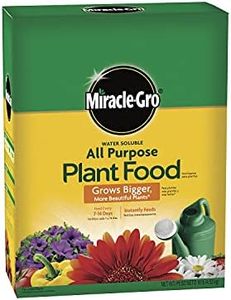
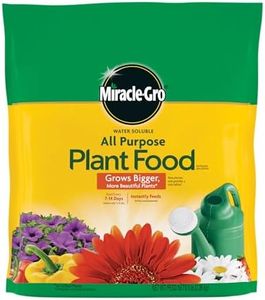
Miracle-Gro Water Soluble All Purpose Plant Food, 10 lb.
Most important from
30743 reviews
The Miracle-Gro Water Soluble All Purpose Plant Food is a versatile fertilizer suitable for indoor and outdoor plants, including flowers, houseplants, vegetables, and trees. This product is known for its efficiency, as it begins working instantly to promote growth and produce more vibrant plants. It's easy to use with either the Miracle-Gro Garden Feeder or a standard watering can, making it convenient for gardeners of all experience levels.
The recommended mixing ratios are clear and straightforward, making it simple to apply the correct amount for both indoor and outdoor plants. The 10 lb. container provides extensive coverage, feeding approximately 4,000 sq. ft. of garden area, which is ideal for those with larger garden spaces. However, it should be noted that this fertilizer is synthetic, which may not appeal to those looking for organic options.
This fertilizer might not be the best choice for those seeking organic solutions or those with highly specific soil pH requirements, but it serves as an excellent general-purpose option for a wide variety of plants and gardening needs.
Most important from
30743 reviews
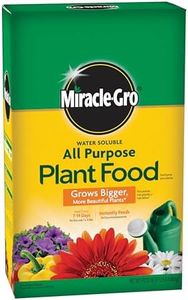
Miracle-Gro Water Soluble All Purpose Plant Food - Fertilizer for All Indoor or Outdoor Plants Including Roses, Flowers, Vegetables, Houseplants, Trees, and Shrubs, 12.5 lbs.
Most important from
30730 reviews
Miracle-Gro Water Soluble All Purpose Plant Food is a versatile fertilizer suitable for a wide range of plants including indoor houseplants, outdoor flowers, vegetables, shrubs, and trees. Its N-P-K ratio of 24-8-16 means it is high in nitrogen, which supports strong leaf and stem growth, making it ideal for plants that need a nutrient boost for greener, lusher growth. The fertilizer is synthetic and water-soluble, allowing it to start working quickly when mixed with water, which is convenient for regular feeding through watering cans or garden feeders.
The powder form dissolves easily, and the application instructions are straightforward, making it user-friendly for both beginners and experienced gardeners. One container covers a large garden area (about 5,000 sq. ft.), which offers good value if you have many plants or a big outdoor space. Because it’s a synthetic, water-soluble formula, the feeding effects are immediate but may require repeated applications for sustained nutrition. If you prefer organic options or slow-release feeding, this might not be the best fit.
Miracle-Gro’s all-purpose plant food is a strong choice for anyone wanting a quick, reliable nutrient boost to a wide variety of plants, indoors and outdoors, especially if you want convenience and visible results fast. It is synthetic and designed for general use, so for plants with special needs, you might want to supplement or select a more specialized fertilizer.
Most important from
30730 reviews
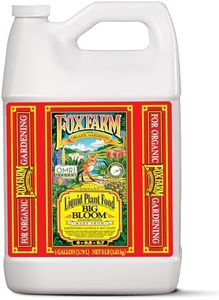
Fox Farm Big Bloom Liquid Plant Food - Organic Bloom Fertilizer for Flowering & Fruiting Plants, Contains Earthworm Castings & Bat Guano - Supports All Stages of Plant Growth - 0-0.5-0.7 NPK, 1Gallon
Most important from
13284 reviews
Fox Farm Big Bloom is an organic liquid fertilizer designed especially for flowering and fruiting plants. Its N-P-K ratio of 0-0.5-0.7 means it contains very low nitrogen but provides small amounts of phosphorus and potassium, which are important for blooms and fruit development rather than leafy growth. This makes it well suited for gardeners who want to encourage flowers and fruits rather than overall plant size.
Being organic, it uses natural ingredients like earthworm castings and bat guano, which also supply beneficial micronutrients that support healthy soil life and plant nutrition. The liquid form allows plants to absorb nutrients quickly, helping them respond faster than with some granular fertilizers. Application is straightforward—just mix the recommended amount with water and apply every other watering, with options for hose-end sprayers or drip irrigation, which makes feeding convenient.
One downside is the low nutrient concentration, so it’s best used alongside a balanced fertilizer to meet all plant needs. Also, because it is acidic due to bat guano, soil pH should be monitored to avoid imbalance over time. This fertilizer is ideal for hobbyist gardeners and small-scale growers focusing on vibrant blooms and fruit production, especially those who prefer organic gardening methods. For those needing a general-purpose fertilizer or higher nitrogen levels for leafy plants, this might not be the best choice on its own.