We Use CookiesWe use cookies to enhance the security, performance, functionality and for analytical and promotional activities. By continuing to browse this site you are agreeing to our privacy policy

10 Best Interconnected Smoke Detectors 2026 in the United States

How do we rank products for you?

Our technology thoroughly searches through the online shopping world, reviewing hundreds of sites. We then process and analyze this information, updating in real-time to bring you the latest top-rated products. This way, you always get the best and most current options available.

headphones-stars

Our Top Picks

#1

Winner

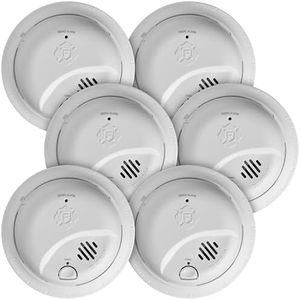
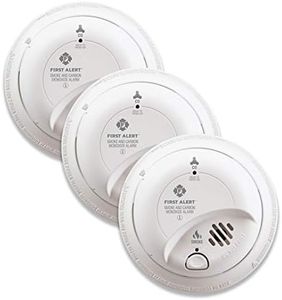
First Alert SMICO100-AC Interconnect Hardwire Combination Smoke & Carbon Monoxide Alarm with Battery Backup, 6-Pack

Rating
10.0
Chosen by1,238
Interconnection Type
Power Source
Sensor Type

Most important from
1196 reviews

Interconnection Type
The alarms work perfectly in tandem—when one sounds, all interconnected units activate, providing comprehensive home coverage.
Power Source
Each detector includes a pre-installed Duracell 9-volt battery and a dust cover, adding convenience and protection during home work.
Sensor Type
Testing is simple and reliable, with the test button activating both smoke and CO sensors in sequence to confirm full functionality.
Ease of Installation
Installation is straightforward and quick, with the new connector allowing rewiring in just about a minute, even for those less experienced.

The First Alert SMICO100-AC is a 6-pack of interconnected smoke and carbon monoxide alarms designed to offer reliable home safety. These alarms use hardwired power with battery backup, ensuring they work even during power outages. The ionization sensor type is effective at detecting fast-flaming fires, making it suitable for general household use. When one alarm goes off, all compatible alarms sound, giving early warning throughout the home — a key feature for interconnected detectors.

Installation is made easier by the secure mounting bracket and included adapter plug, which helps position the alarms correctly. Maintenance is straightforward with a latching alarm indicator that shows which unit triggered the alert or needs attention, simplifying testing and battery checks. While these alarms do not include advanced smart features like smartphone connectivity or voice alerts offered by some newer models, the Precision Detection technology aims to reduce false alarms associated with ionization sensors, which can be prone to nuisance alarms from cooking smoke.

This set provides a dependable option for families seeking interconnected smoke and CO detection without the complexity of smart home integrations.

Rating
10.0
Chosen by1,238
Interconnection Type
Power Source
Sensor Type

Most important from
1196 reviews

Interconnection Type
The alarms work perfectly in tandem—when one sounds, all interconnected units activate, providing comprehensive home coverage.
Power Source
Each detector includes a pre-installed Duracell 9-volt battery and a dust cover, adding convenience and protection during home work.
Sensor Type
Testing is simple and reliable, with the test button activating both smoke and CO sensors in sequence to confirm full functionality.
Ease of Installation
Installation is straightforward and quick, with the new connector allowing rewiring in just about a minute, even for those less experienced.
#2

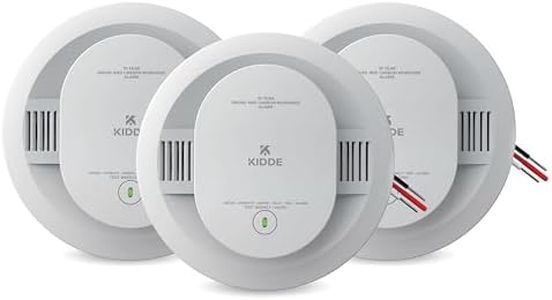
FIRST ALERT BRK SC9120B-3 Hardwired Smoke and Carbon Monoxide (CO) Detector with Battery Backup, White, Pack of 3

Rating
8.2
Interconnection Type
Power Source
Sensor Type

Most important from
26827 reviews

Interconnection Type
The alarm system interconnects flawlessly, ensuring all units sound together when one detects danger, enhancing home safety.
Power Source
Comes with pre-installed Duracell 9-volt batteries and useful extras like dust covers, adding convenience and protection during installation.
Sensor Type
The loud, high-pitched alarm effectively alerts occupants, covering both smoke and carbon monoxide threats reliably.
Ease of Installation
Installation is straightforward and quick, even for those replacing older units, with a perfect fit and immediate functionality.
Maintenance and Testing
Testing both smoke and CO detectors is simple with a single button that confirms full functionality through distinct beeps.

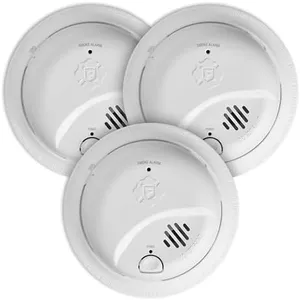
The FIRST ALERT BRK SC9120B-3 is a reliable choice for anyone wanting a dependable combination of smoke and carbon monoxide detection, especially for homes that prefer hardwired systems with battery backup. It uses two sensor types: ionization for fast-burning fires and electrochemical for carbon monoxide, covering key safety threats effectively. The units interconnect with other First Alert or BRK alarms, which means if one detects danger, all alarms in the network will sound — a great safety feature for larger homes. Powered primarily by your home's wiring but with battery backup, these alarms keep working even during power outages. Installation is simplified by universal mounting brackets and tamper-resistant locking, plus the side-load battery compartment makes battery replacement straightforward. Testing and silencing alarms can be done easily with a single button, reducing hassle during regular maintenance.

These detectors do not have advanced smart features like app connectivity or remote alerts, which some newer models offer for added convenience. Also, while the installation is easier than many other hardwired units, it still requires access to wiring and might be best handled by someone comfortable with home electrical work. This pack is well suited for those who want strong, no-nonsense protection with dependable interconnection and backup power, without needing extra smart technology or a complex setup.

Rating
8.2
Interconnection Type
Power Source
Sensor Type

Most important from
26827 reviews

Interconnection Type
The alarm system interconnects flawlessly, ensuring all units sound together when one detects danger, enhancing home safety.
Power Source
Comes with pre-installed Duracell 9-volt batteries and useful extras like dust covers, adding convenience and protection during installation.
Sensor Type
The loud, high-pitched alarm effectively alerts occupants, covering both smoke and carbon monoxide threats reliably.
Ease of Installation
Installation is straightforward and quick, even for those replacing older units, with a perfect fit and immediate functionality.
Maintenance and Testing
Testing both smoke and CO detectors is simple with a single button that confirms full functionality through distinct beeps.
#3

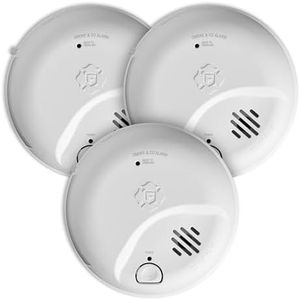
First Alert Smoke Alarm, Interconnect Hardwire Detector with Battery Backup, SMI100-AC, 3-Pack

Rating
7.6
Ease of Installation

Most important from
1719 reviews

Ease of Installation
Installation is straightforward and hassle-free, even with existing wiring.

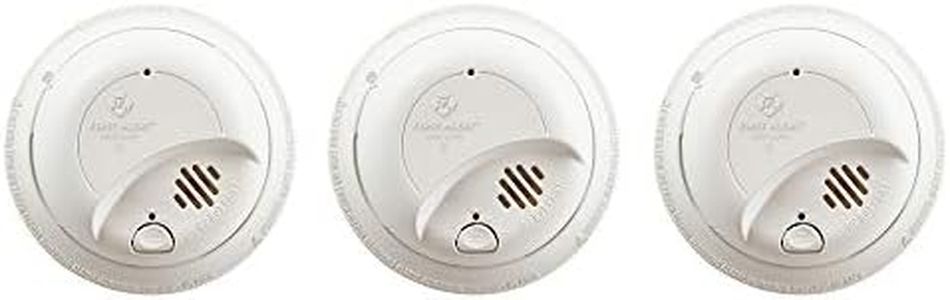
The First Alert SMI100-AC interconnected smoke alarm is a reliable choice for home safety, offering a 3-pack of alarms that connect via a hardwire interconnect system. This means that when one alarm is triggered, all connected alarms will sound, providing comprehensive coverage throughout your home. The ionization sensor is effective at detecting fast-flaming fires, which are common in residential settings. However, ionization sensors can be prone to false alarms from cooking smoke, though the Precision Detection technology aims to minimize this inconvenience. Each detector includes a battery backup, ensuring continuous protection even during power outages, a crucial feature for any smoke alarm system.

Installation is straightforward with the included Quick Connect Plug, eliminating the need for rewiring and making it user-friendly for most homeowners. The visual alarm indicator is a practical addition, helping to quickly identify which unit triggered the alarm. On the downside, while the unit is battery-powered, it requires zinc carbon batteries, which may need more frequent replacement compared to lithium batteries.

Additionally, the product lacks smart features, such as app connectivity or integration with other home automation systems, which could be a drawback for users looking for advanced smart home capabilities. Maintenance and testing are simplified with the easy adapter plug and included 9V alkaline battery, but regular battery checks and replacements are necessary to ensure functionality. This product is well-suited for users seeking a straightforward, reliable smoke detection system without the need for smart features.

Rating
7.6
Ease of Installation

Most important from
1719 reviews

Ease of Installation
Installation is straightforward and hassle-free, even with existing wiring.

Buying Guide for the Best Interconnected Smoke Detectors

Choosing the right interconnected smoke detectors is crucial for ensuring the safety of your home and loved ones. Interconnected smoke detectors are designed to communicate with each other, so when one detects smoke, all alarms in the network will sound. This feature provides an added layer of protection, especially in larger homes or multi-story buildings. To make an informed decision, it's important to understand the key specifications and how they align with your specific needs.
Interconnection TypeInterconnection type refers to how the smoke detectors communicate with each other. There are two main types: hardwired and wireless. Hardwired detectors are physically connected through electrical wiring, which can be more reliable but may require professional installation. Wireless detectors use radio frequency to communicate, making them easier to install and ideal for retrofitting older homes. Choose hardwired if you are building a new home or renovating, and wireless if you need a simpler installation process.
Power SourceThe power source of a smoke detector can be either battery-operated, hardwired with a battery backup, or solely hardwired. Battery-operated detectors are easy to install and maintain but require regular battery changes. Hardwired detectors with battery backup offer continuous protection even during power outages. Solely hardwired detectors rely entirely on your home's electrical system. For maximum safety, opt for hardwired with battery backup, especially in areas prone to power outages.
Sensor TypeSmoke detectors use different types of sensors to detect smoke: ionization, photoelectric, or dual-sensor. Ionization sensors are better at detecting fast-flaming fires, while photoelectric sensors are more responsive to smoldering fires. Dual-sensor detectors combine both technologies for comprehensive coverage. If you want the best protection, choose dual-sensor detectors. If you have specific concerns, such as a higher risk of fast-flaming fires, you might opt for ionization or photoelectric accordingly.
Smart FeaturesSome interconnected smoke detectors come with smart features, such as connectivity to your smartphone, integration with home automation systems, and voice alerts. These features can provide real-time notifications and allow you to monitor your home’s safety remotely. If you are tech-savvy and want added convenience and control, look for detectors with smart features. If you prefer simplicity, basic interconnected detectors without smart features will suffice.
Ease of InstallationEase of installation is an important consideration, especially if you plan to install the detectors yourself. Wireless detectors are generally easier to install as they do not require wiring. Hardwired detectors may require professional installation, especially if your home does not already have the necessary wiring. Consider your comfort level with DIY projects and whether you are willing to hire a professional when choosing between hardwired and wireless options.
Maintenance and TestingRegular maintenance and testing are crucial for ensuring your smoke detectors function properly. Some detectors come with features like self-testing, low battery alerts, and easy access for battery replacement. Choose detectors that offer convenient maintenance features to ensure you can easily keep them in working order. If you prefer minimal maintenance, look for models with long-life batteries or self-testing capabilities.

FAQ