We Use CookiesWe use cookies to enhance the security, performance, functionality and for analytical and promotional activities. By continuing to browse this site you are agreeing to our privacy policy

10 Best Color Laser Printers 2026 in the United States
How do we rank products for you?

Our technology thoroughly searches through the online shopping world, reviewing hundreds of sites. We then process and analyze this information, updating in real-time to bring you the latest top-rated products. This way, you always get the best and most current options available.

headphones-stars

Our Top Picks

#1

Winner

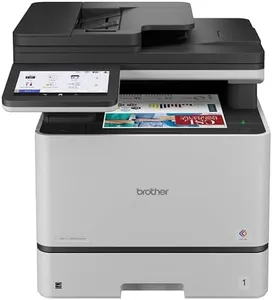
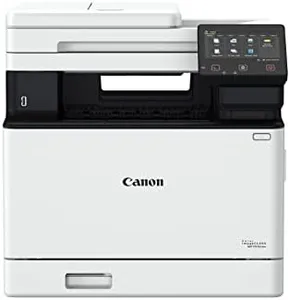
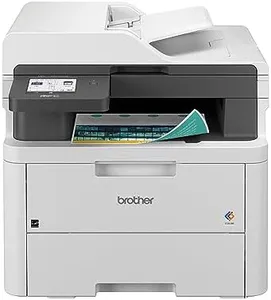
Brother MFC-L3780CDW Wireless Digital Color All-in-One Printer with Laser Quality Output, Single Pass Duplex Copy & Scan | Includes 2 Month Refresh Subscription Trial, Works with Alexa

Rating
10.0
Chosen by1,186
Print Speed
Print Quality
Connectivity Options

Most important from
763 reviews

Print Speed
Prints are fast and quiet, a huge improvement over older models with frequent jams and delays.
Print Quality
While it's not a photo printer, the color output is bright and perfectly acceptable for documents.
Connectivity Options
Finding a printer that doesn't suck is rare, but this one exceeded expectations. Easy setup and AirPrint works instantly.
Paper Handling
Though there were a couple of jams on larger print jobs, it was easy to clear by accessing the back of the printer.
Additional Features
Single-pass duplex scanning is a standout feature, enhancing efficiency in the office.

The Brother MFC-L3780CDW is a solid choice for small businesses and offices, thanks to its comprehensive all-in-one functionality. It excels in print speed, offering up to 31 pages per minute in both monochrome and color, which is quite impressive for enhancing productivity. The print quality is high, with a maximum resolution of 2400 x 600 dpi, ensuring sharp and vibrant documents. Connectivity options are robust, including dual-band wireless, Gigabit Ethernet, Wi-Fi Direct, USB, and NFC, making it versatile for various office setups.

Paper handling is efficient with a 250-sheet capacity and automatic duplex printing, which saves time and reduces paper usage. However, the printer's weight of 47.8 pounds may be cumbersome for smaller office spaces or frequent relocation. The cost of consumables is a consideration; while genuine Brother toner cartridges guarantee reliability, they can be pricey. The inclusion of a Refresh EZ Print Subscription Service offers potential savings on toner, though users must commit to the subscription model.

Additional features like single-pass duplex copy and scan, and the ability to manage print jobs via voice control, enhance its appeal. The initial cost and ongoing expenses for toner might be a drawback for budget-conscious users. The Brother MFC-L3780CDW is best suited for small to medium-sized offices that prioritize speed, quality, and multifunctionality in their printing needs.

Rating
10.0
Chosen by1,186
Print Speed
Print Quality
Connectivity Options

Most important from
763 reviews

Print Speed
Prints are fast and quiet, a huge improvement over older models with frequent jams and delays.
Print Quality
While it's not a photo printer, the color output is bright and perfectly acceptable for documents.
Connectivity Options
Finding a printer that doesn't suck is rare, but this one exceeded expectations. Easy setup and AirPrint works instantly.
Paper Handling
Though there were a couple of jams on larger print jobs, it was easy to clear by accessing the back of the printer.
Additional Features
Single-pass duplex scanning is a standout feature, enhancing efficiency in the office.
#2

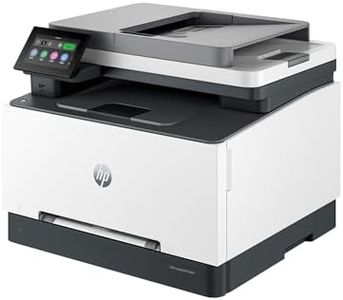
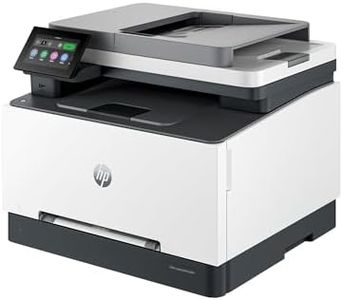
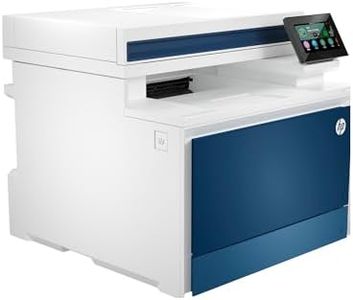
HP Color LaserJet Pro MFP 4301fdw Wireless All-in-One Color Laser Printer, Scanner, Copier, Fax, Best-for-Office

Rating
9.7
Print Speed
Print Quality
Paper Handling

Most important from
604 reviews

Print Speed
Print speed is impressive, making it ideal for busy office environments.
Print Quality
The print quality is perfect, making it suitable for professional use.
Paper Handling
Some users have experienced recurring paper jam issues, significantly impacting usability.
Cost of Consumables
The cost of toner is high, which could be a concern for budget-conscious users.

The HP Color LaserJet Pro MFP 4301fdw is a solid choice for small teams looking for a reliable all-in-one color laser printer. One of its standout features is the print speed, capable of delivering up to 35 pages per minute in color, which is impressive for busy office environments. The print quality is commendable, producing sharp and vibrant documents that are essential for professional presentations and reports. Additionally, it supports auto 2-sided printing and comes with an auto document feeder, which adds convenience when scanning or copying multiple pages.

In terms of connectivity, this printer is equipped with intelligent Wi-Fi that adapts to ensure a stable connection, making it easy to print from various mobile devices. The inclusion of security features, like HP Wolf Pro Security, is a big plus for protecting sensitive information.

However, there are a few drawbacks to consider. Firstly, the printer is relatively heavy at 45 pounds, which may limit its placement options. Additionally, while the printer is heavy on features, the cost of consumables, such as toner, can be higher compared to inkjet alternatives. This may be a concern for those on a tight budget, especially if printing in high volumes. Lastly, while it caters well to small teams of up to 10 people, larger offices might find it a bit lacking in throughput for their needs. If you’re looking for a reliable color laser printer that combines speed, quality, and security for a small office setting, the HP Color LaserJet Pro MFP 4301fdw is definitely worth considering.

Rating
9.7
Print Speed
Print Quality
Paper Handling

Most important from
604 reviews

Print Speed
Print speed is impressive, making it ideal for busy office environments.
Print Quality
The print quality is perfect, making it suitable for professional use.
Paper Handling
Some users have experienced recurring paper jam issues, significantly impacting usability.
Cost of Consumables
The cost of toner is high, which could be a concern for budget-conscious users.
#3

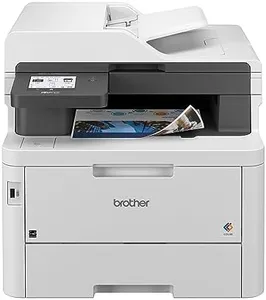
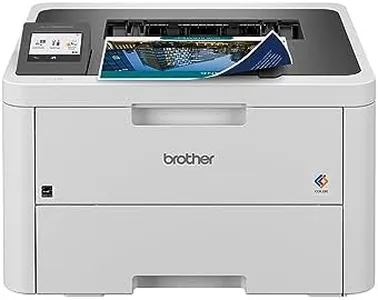
Brother HL-L3280CDW Wireless Compact Digital Color Printer with Laser Quality Output, Duplex, Mobile Printing & Ethernet | Includes 2 Month Refresh Subscription Trial¹,Works with Alexa

Rating
9.7
Print Quality
Connectivity Options
Paper Handling

Most important from
730 reviews

Print Quality
Print quality is impressive, with initial print jobs looking great and no hiccups along the way.
Connectivity Options
Setting up the Brother HL-L3280CDW is straightforward, especially for network connections, even without using the app.
Paper Handling
Handling envelopes is problematic, often resulting in creases and slow processing times, making it less suitable for frequent envelope printing.
Cost of Consumables
Despite the ease of setup, there are significant issues with toner consumption, with cartridges depleting quickly even with minimal color printing.
Additional Features
The design makes it simple to replace toner cartridges and clear paper jams, adding to its usability.

The Brother HL-L3280CDW is a strong contender for small and home offices seeking a reliable color laser printer. It boasts a notable print speed of up to 27 pages per minute (ppm) for both color and monochrome prints, which can help keep your productivity high. The print quality, with a resolution of 2400 x 600 dpi, ensures that your documents and images are crisp and professional-looking. This model includes automatic duplex printing, a valuable feature for those who need to print double-sided documents efficiently.

Connectivity options are diverse, with Wi-Fi, USB, and Ethernet, making it easy to integrate into various setups and enabling mobile printing from smartphones, tablets, and cloud-based apps. The 2.7-inch touchscreen enhances usability by offering easy navigation through its functions and cloud printing options. However, it should be noted that the printer is relatively heavy at 33.9 pounds, which might be a consideration for users with limited space or who require portability.

The initial cost of consumables, such as toner cartridges, can be high, although the inclusion of a 4-month subscription trial for toner replenishment could alleviate some initial expenses. The printer handles a range of media sizes and types, with a 250-sheet input capacity, which is adequate for moderate use but might not suffice for high-volume printing needs. Despite some minor drawbacks, the Brother HL-L3280CDW offers a comprehensive set of features that can meet the demands of small office environments efficiently.

Rating
9.7
Print Quality
Connectivity Options
Paper Handling

Most important from
730 reviews

Print Quality
Print quality is impressive, with initial print jobs looking great and no hiccups along the way.
Connectivity Options
Setting up the Brother HL-L3280CDW is straightforward, especially for network connections, even without using the app.
Paper Handling
Handling envelopes is problematic, often resulting in creases and slow processing times, making it less suitable for frequent envelope printing.
Cost of Consumables
Despite the ease of setup, there are significant issues with toner consumption, with cartridges depleting quickly even with minimal color printing.
Additional Features
The design makes it simple to replace toner cartridges and clear paper jams, adding to its usability.

Buying Guide for the Best Color Laser Printers

When you're looking to buy a color laser printer, focus first on what you mainly need to print—such as photos, documents, presentations, or labels. Think about how often you'll print, and whether you'll be printing in large batches. Also consider where the printer will be placed (home office, shared workspace, etc.), and who will use it. Knowing your typical print jobs and usage patterns will help you figure out which features really matter to you and make it easier to pick a printer that fits your needs best.
Print Speed (Pages Per Minute, PPM)Print speed tells you how many pages a printer can produce in one minute, usually split between black-and-white and color prints. This is important because if you have a high volume of printing or often need documents quickly, a faster print speed keeps you productive. Entry-level printers generally offer speeds around 15-20 PPM, which is fine for home or light office use. Mid-range printers may print between 20-35 PPM, great for moderate daily needs. High-speed models go above 35 PPM, ideal for busy offices or teams. To pick what you need, think about whether you'll be printing a few pages here and there, or need to turn around large sets of documents quickly.
Print Resolution (DPI)Print resolution, measured in DPI (dots per inch), tells you how sharp and detailed your prints will look. A higher DPI means crisper text and finer color detail, which is important if you print charts, graphics, or images. Basic models have a resolution around 600 x 600 DPI, suitable for plain text and simple graphics. Mid-level resolutions like 1200 x 1200 DPI give you better images and more professional documents. Very high resolutions (over 2400 DPI) are most useful if you need to present polished graphics or marketing materials. Choose according to your typical print content; for mostly text, lower DPI is fine, but for marketing material or colorful image-heavy prints, aim higher.
Connectivity OptionsConnectivity refers to how you connect the printer to your computer or network. Common options include USB, Wi-Fi, Ethernet, and sometimes Bluetooth or cloud printing. This is important for convenience—if you want to print wirelessly from multiple devices or enable printing from phones and tablets, wireless and network features matter more. Basic home printers might have USB only, while more flexible models support Wi-Fi or Ethernet for shared use. Cloud or mobile printing is useful in tech-savvy households and offices. Match the connectivity to your devices and how you intend to print; go for simple cables if printing from one computer, or wireless/network options for flexibility and shared access.
Paper Handling (Capacity and Supported Sizes)Paper handling covers how much paper the printer can hold (input tray capacity), and what sizes or types it supports (like envelopes, card stock). This matters if you print in high volumes or need special formats. Small/home printers hold 100-150 sheets, which is okay for light use, but offices might want a 250-sheet or larger tray to reduce refilling. Some printers handle multiple sizes or offer extra trays for specialized tasks. Consider your print frequency and whether you’ll regularly print on larger sizes or special media, and pick a printer with enough capacity and flexibility to avoid constant paper changes.
Duplex Printing (Automatic Double-Sided Printing)Duplex printing is the ability to print on both sides of a sheet automatically. It saves paper, costs, and time, especially for reports or multi-page documents. Not all printers offer this, and sometimes it’s manual. If you expect to produce lots of multi-page documents or want to save on paper, automatic duplexing is a convenience you’ll appreciate. If you only print single pages or don’t mind turning the paper yourself, it may not be necessary.
Running Costs (Toner Efficiency and Maintenance)Running costs involve how much you’ll spend over time on toner and replacement parts. Toner efficiency (pages per cartridge) tells you how often you'll need new cartridges, affecting your ongoing expenses and convenience. Printers with higher-capacity cartridges cost less per page, while low-capacity ones may require frequent replacements. Also, check if maintenance kits or replacement drums are needed. If you print a lot, higher-yield cartridges and easy maintenance will save hassle and money; if your usage is light, this may not be a top concern.
Size and Noise LevelSize and noise level can be important if you have a small workspace or share your environment. Some laser printers are quite bulky or loud, which can be bothersome in a quiet area. Smaller, quieter models are better for individual workspaces or homes, while larger ones are fine in dedicated print rooms or busy offices. Think about your available space, placement, and tolerance for noise before deciding.

FAQ