We Use CookiesWe use cookies to enhance the security, performance, functionality and for analytical and promotional activities. By continuing to browse this site you are agreeing to our privacy policy

10 Best Baseboard Heaters 2026 in the United States
How do we rank products for you?

Our technology thoroughly searches through the online shopping world, reviewing hundreds of sites. We then process and analyze this information, updating in real-time to bring you the latest top-rated products. This way, you always get the best and most current options available.

headphones-stars

Our Top Picks

#1

Winner

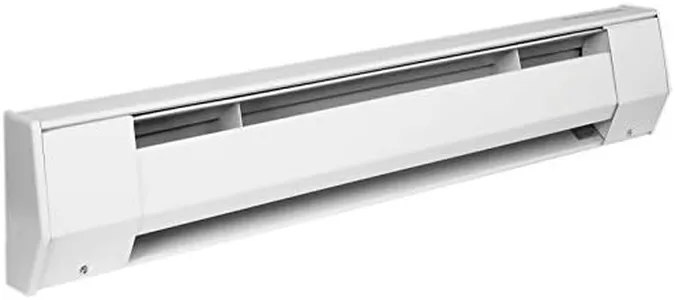
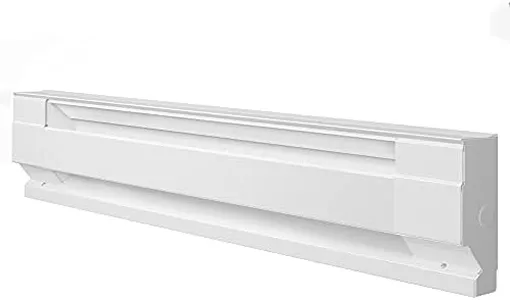
Cadet F Series 72 in. Electric Baseboard Heater (Model: 6F1500-1W, Part: 05536), 120 Volt, 1500 Watt, White

Rating
10.0
Chosen by1,490
Wattage
Thermostat Type
Material

Most important from
141 reviews

Wattage
Delivers reliable, effective heating that quickly warms rooms during cold seasons.
Thermostat Type
Requires a separately purchased thermostat to control temperature and power effectively.
Material
The heater’s design is both lightweight and attractive, fitting well in home interiors.

The Cadet F Series 72-inch Electric Baseboard Heater offers a reliable way to heat indoor spaces with its 1500-watt power and 120-volt requirement, which is standard for many home outlets. Its long length of 72 inches helps distribute heat evenly along walls, making it suitable for medium to larger rooms. The heater is made from sturdy 25-gauge steel, with a durable powder-coated finish on the metal junction box, which adds to its safety and longevity. This model does not come with a built-in thermostat, meaning you’ll need to install one separately to control the temperature effectively, which may be a consideration if you prefer a ready-to-use unit without extra parts.

On the safety front, it is UL listed, meeting recognized safety standards for peace of mind. Designed for indoor use only, it provides fast heating, so you won’t have to wait long to feel the warmth. As a baseboard heater, it installs along the floor and operates quietly with low maintenance requirements. This unit is a solid choice for anyone wanting a dependable electric baseboard heater, though those needing an integrated thermostat or outdoor capability might want to consider other options.

Rating
10.0
Chosen by1,490
Wattage
Thermostat Type
Material

Most important from
141 reviews

Wattage
Delivers reliable, effective heating that quickly warms rooms during cold seasons.
Thermostat Type
Requires a separately purchased thermostat to control temperature and power effectively.
Material
The heater’s design is both lightweight and attractive, fitting well in home interiors.
#2

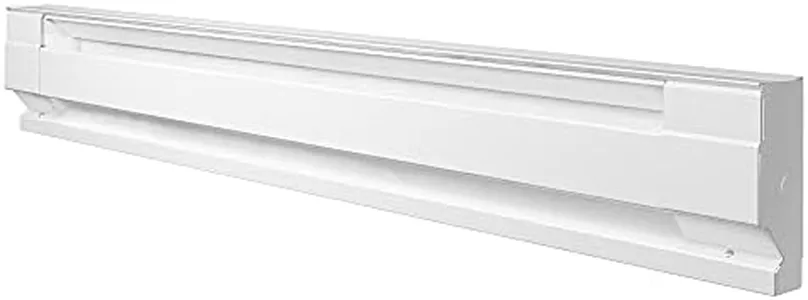
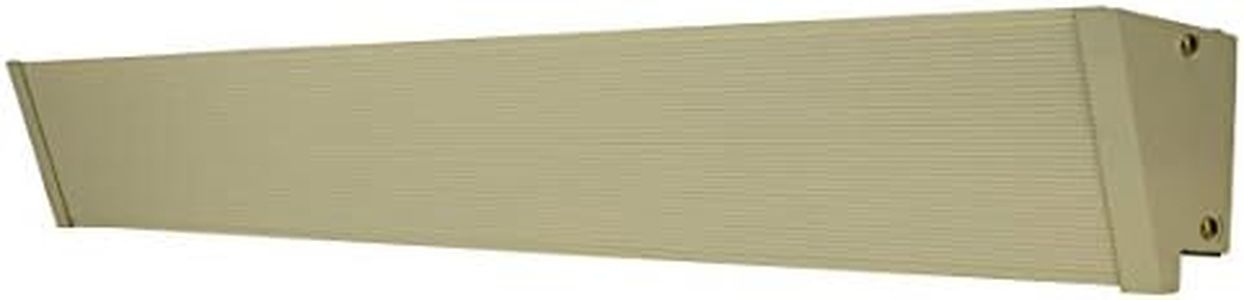
KING KCV2404-A alCove Series Radiant Convection Cove Heater, 34" / 420W / 240V, Almond

Rating
8.8
Thermostat Type
Safety Features

Most important from
121 reviews

Thermostat Type
Requires pairing with a thermostat for optimal temperature control and ease of use.
Safety Features
The heater’s surface becomes warm but remains safe and comparable to traditional baseboard units.

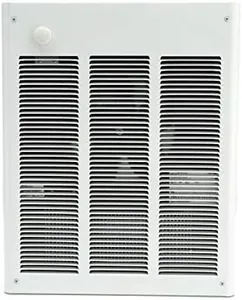
The KING KCV2404-A Cove Heater is a 420-watt, 34-inch electric heater designed for indoor use, especially suitable for bathrooms and bedrooms. It runs on 240 volts and uses both radiant and convection heating, which means it gently warms the air and surfaces nearby for comfortable, silent warmth from above. Its extruded aluminum front panel helps with quick heat distribution, and the open-back design boosts airflow for efficient convection.

Installation is flexible and straightforward, with options to wire it from either end and mount it on the wall or ceiling, saving space in smaller rooms. The unit is built with durability in mind, featuring a long-life heating element and noiseless operation, adding to user comfort. The almond color blends well with many interiors, and the unit comes with a 2-year warranty.

This model is a solid choice for those wanting a quiet, space-saving heater that provides reliable warmth. Users looking for advanced safety features or adjustable thermostat controls may consider pairing it with additional accessories or exploring other models.

Rating
8.8
Thermostat Type
Safety Features

Most important from
121 reviews

Thermostat Type
Requires pairing with a thermostat for optimal temperature control and ease of use.
Safety Features
The heater’s surface becomes warm but remains safe and comparable to traditional baseboard units.
#3

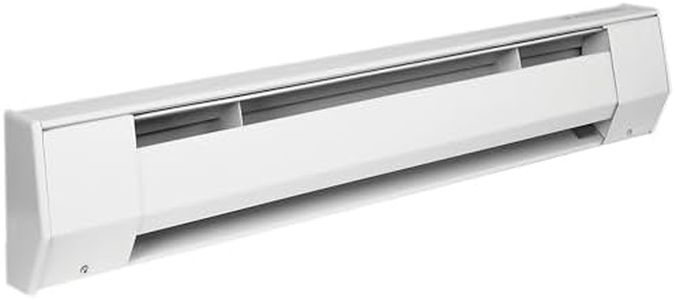
King 5K1212BW 1250-Watt 120-Volt 5-Foot Baseboard Heater, Bright White

Rating
8.5
Voltage

Most important from
25 reviews

Voltage
The product is perfect, though I mistakenly ordered the wrong voltage.

The KING 5K1212BW K Series Baseboard Heater is designed to provide efficient heating for indoor spaces. With a wattage of 1250W at 120V, it’s powerful enough for smaller rooms, making it an excellent choice for residential heating needs. One of its standout features is the aluminum ribbon fin element, which helps distribute heat evenly and quickly, ensuring a warm environment without long wait times. The natural convection heat design contributes to a comfortable atmosphere without the noise associated with some heating systems.

Safety is a priority with this model, as it includes a full-length safety cutout and a crushproof element, minimizing the risk of overheating or damage. The dent-resistant die-form cover adds durability, making it suitable for areas with heavier foot traffic. Plus, being made in the USA adds a level of quality assurance to the product.

This heater is not a plug-in model, meaning it requires hard-wiring, which might not be ideal for renters or those who prefer a simple setup. Additionally, its dimensions can be a bit misleading as it’s listed as 1” x 1” x 1” but is actually a long baseboard unit. Users seeking a compact or portable heating solution may find this design less convenient.

Rating
8.5
Voltage

Most important from
25 reviews

Voltage
The product is perfect, though I mistakenly ordered the wrong voltage.

Buying Guide for the Best Baseboard Heaters

Baseboard heaters are a popular choice for home heating due to their simplicity, efficiency, and ease of installation. When choosing a baseboard heater, it's important to consider several key specifications to ensure you select the right model for your needs. Understanding these specifications will help you make an informed decision and ensure your home stays warm and comfortable during the colder months.
WattageWattage measures the power output of the heater and is crucial for determining how much heat the unit can produce. Higher wattage means more heat output. Typically, baseboard heaters range from 500 to 2000 watts. For small rooms or supplemental heating, a lower wattage (500-1000 watts) may suffice. For larger rooms or primary heating, you may need a higher wattage (1500-2000 watts). Consider the size of the room and the level of insulation when choosing the wattage.
LengthThe length of a baseboard heater affects its heat distribution. Longer heaters can distribute heat more evenly across a room. Baseboard heaters come in various lengths, usually ranging from 2 to 8 feet. For smaller rooms, shorter heaters (2-4 feet) may be adequate, while larger rooms may benefit from longer heaters (6-8 feet). Measure the available wall space and consider the room's layout to determine the appropriate length.
VoltageVoltage is the electrical potential required to operate the heater. Baseboard heaters typically come in 120V or 240V models. 120V heaters are suitable for smaller spaces and are easier to install, as they can be plugged into standard household outlets. 240V heaters are more powerful and efficient for larger spaces but require a dedicated circuit. Check your home's electrical system and consult an electrician if necessary to determine the appropriate voltage for your heater.
Thermostat TypeThe thermostat controls the temperature of the heater. There are two main types: built-in and wall-mounted. Built-in thermostats are integrated into the heater and are convenient for individual room control. Wall-mounted thermostats offer more precise temperature control and can manage multiple heaters in different rooms. If you prefer simple, localized control, a built-in thermostat may be sufficient. For more advanced control and energy efficiency, consider a wall-mounted thermostat.
MaterialThe material of the heater affects its durability and heat conduction. Common materials include steel, aluminum, and ceramic. Steel heaters are durable and provide consistent heat but can be heavier. Aluminum heaters are lightweight and heat up quickly but may not retain heat as long. Ceramic heaters offer efficient heat distribution and are often quieter. Consider the room's usage and your preference for heat retention and noise level when choosing the material.
Safety FeaturesSafety features are essential to prevent accidents and ensure safe operation. Look for features such as overheat protection, tip-over switches, and cool-touch exteriors. Overheat protection automatically shuts off the heater if it gets too hot, preventing fires. Tip-over switches turn off the heater if it is knocked over, which is especially important in homes with children or pets. Cool-touch exteriors prevent burns by keeping the heater's surface temperature low. Prioritize safety features based on your household's needs and potential risks.

FAQ